![[Freelance]](../gif/fl3H.png)
Monthly tax returns would be a curse
LONDON FREELANCE Branch Chair Pennie Quinton is a member of the NUJ delegation to Trades Union Congress 2026, held in Brighton from 14 to 17 September. On Monday 14 September Pennie spoke in support of composite motion C03 calling for improved rights for the genuinely self-employed. She drew attention in her speech to the government consultation held between June and September 2026 on the idea of making freelances file tax returns once a month. Please see the text below.
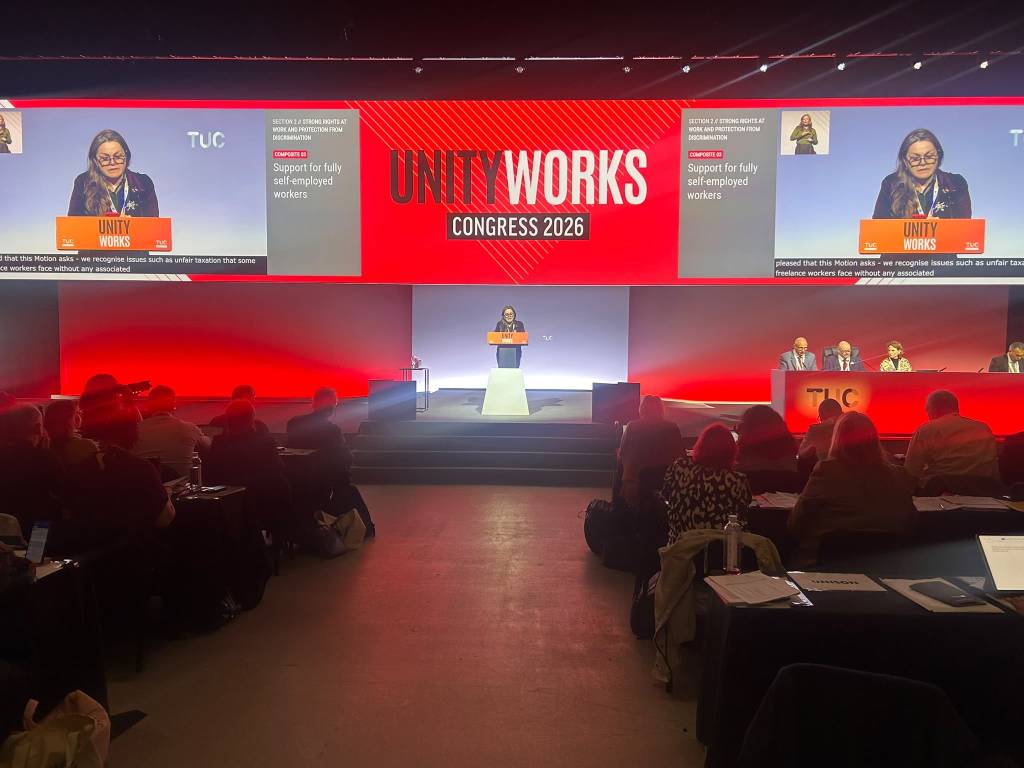
Pennie Quinton speaks
Thank you, Congress - my name is Pennie Quinton and I am chair of the National Union of Journalists London Freelance Branch – which supports around 4000 freelance NUJ Members. So I am pleased that this motion asks that we recognise issues such as unfair taxation that some freelance workers face - without any of the associated employment rights.
I was concerned to learn that HMRC held a consultation between June and August of this year on “timely payments” in income tax self-assessment. The Government’s consultation sought views on whether freelance and self-employed workers might submit their tax returns on a monthly basis “to prevent a tax bill payment shock”.
Filing monthly tax returns will not work for Freelance journalists.
Why?
Freelance journalists often work on short-term contracts, and are engaged to perform project-based roles and often manage multiple concurrent income streams.
Freelance journalists frequently move between PAYE employment, self-employment, limited company arrangements and periods without work, often several times within a single year.
Freelance earnings are often unpredictable and unevenly distributed. Periods of intensive work can be followed by weeks or months without income, and many of our members experience significant delays in receiving payment.
For these reasons, any move towards a “timelier” payment of Income Tax Self-Assessment must be designed with an understanding of how journalists and other creative workers are paid and engaged.
Tax reforms must recognise income volatility, protect workers from hardship during periods without work, allow forecasts to be updated easily when circumstances change, and provide taxpayers with meaningful choice over how payments are made.
Tax systems designed around stable and predictable employment patterns risk creating unintended consequences for the large numbers of workers whose careers depend upon irregular, freelance work.
Our members have expressed concerns at what this might mean in terms of their having to take time to administer tax each month during periods of intense deadline focused work, such as reporting in conflict zones or working on travel-based assignments.
For freelance workers filing 12 tax returns a year would be time consuming and leave money unearned.
Please support this motion.
 TUC Congress 2026 backs BBC workers full report on nuj.org.uk